
Automated class scheduling for tutoring centers has become a must-have, not a nice-to-have. Parents expect instant booking, students want flexible options, and administrators are tired of spreadsheets, sticky notes, and endless phone calls.
In 2025, most successful tutoring operations rely on automated class scheduling for tutoring centers to manage bookings, tutor availability, room assignments, and even payments in one system.
Modern tools act like a smart control center: they sync with online calendars, manage recurring classes, send reminders, and provide real-time reports on attendance and revenue. Instead of manually juggling schedules, tutoring managers can focus on educational quality and growth.
This guide dives deep into what automated class scheduling for tutoring centers really means today, how it works, how to choose the right platform, and how AI will reshape scheduling over the next 5–10 years.
What Is Automated Class Scheduling for Tutoring Centers?

Automated class scheduling for tutoring centers is the use of specialized software to plan, manage, and optimize tutoring sessions without constant manual intervention.
The software functions as a smart calendar that understands tutors’ availability, student preferences, holidays, locations, and class types, and then automates as many scheduling tasks as possible.
Instead of an administrator building schedules by hand, the system handles bookings, recurring sessions, and last-minute changes based on rules you define.
Most platforms designed for automated class scheduling for tutoring centers combine several tools in one: online booking pages for parents and students, calendars for each tutor, room and resource management, and automated communication channels like emails and SMS reminders.
Many solutions also integrate video conferencing links, so online classes are automatically created in Zoom, Google Meet, or similar tools. This eliminates confusion and significantly reduces no-shows.
Today’s systems don’t just record bookings; they operate as workflow engines. With automated class scheduling for tutoring centers, you can set rules like “no back-to-back classes without a buffer,” “limit group size to six,” or “always pair this student with this tutor.”
The software enforces these rules every time someone books or reschedules. Over time, analytics reveal which time slots are most popular, which programs are growing, and where you have unused capacity. This makes automated class scheduling for tutoring centers a strategic tool, not just an administrative convenience.
Why Manual Scheduling Holds Tutoring Centers Back

Many tutoring centers still rely on phone calls, text threads, shared spreadsheets, or paper calendars. At a small scale, this can feel manageable, but as soon as you add more tutors, subjects, and locations, manual scheduling becomes a major bottleneck.
Automated class scheduling for tutoring centers directly addresses the hidden costs of manual processes: errors, delays, double-booking, and frustrated families.
Manual systems make it easy to overbook a room or assign a tutor to two students at the same time. When schedules change — because a student cancels, a tutor gets sick, or a parent needs to reschedule — staff must update multiple places: the wall calendar, the spreadsheet, email confirmations, and maybe a billing system.
Every extra step is a chance for mistakes. In contrast, automated class scheduling for tutoring centers uses a single source of truth, updating calendars, notifications, and financial records in one step.
There’s also the opportunity cost. Staff who spend hours each week answering “What times do you have on Tuesday?” could be welcoming new families, following up on leads, or supporting tutors. Parents increasingly expect to book tutoring sessions online at any time of day, just like they do with doctors, gyms, and salons.
When you rely on manual scheduling instead of automated class scheduling for tutoring centers, you risk losing prospective students who prefer self-service booking and immediate confirmation. Over time, this gap can directly impact revenue and reputation.
Core Features of Modern Automated Scheduling Systems
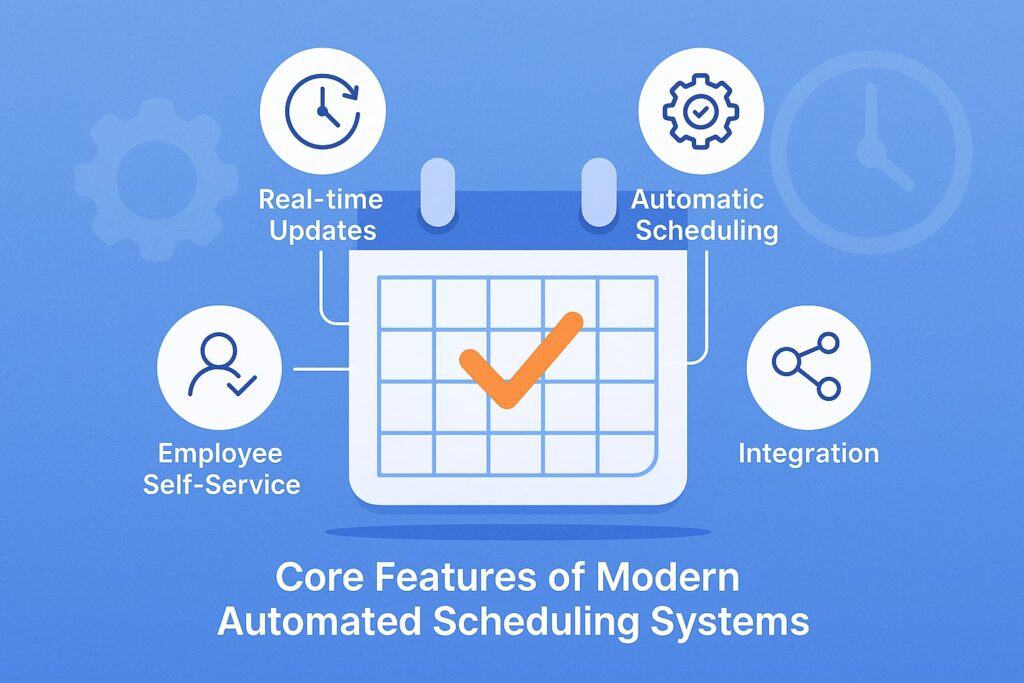
Modern platforms for automated class scheduling for tutoring centers share a set of core features. Understanding these capabilities helps you evaluate software options and build a system that fits your tutoring model today and scales with you tomorrow.
At a high level, automated class scheduling for tutoring centers includes online booking, smart calendar management, automation of reminders and payments, and robust student and tutor management.
Many systems add advanced analytics, mobile apps, and integrations with learning platforms, CRM tools, and accounting software. Together, these features turn a simple calendar into an operational hub.
Below are three critical feature categories that define effective automated class scheduling for tutoring centers and why they matter for both daily operations and long-term growth.
Online Booking and Self-Service Portals
Online booking is the front door of automated class scheduling for tutoring centers. Instead of calling your center during business hours, parents and students visit a branded booking page to select services, times, tutors, and locations.
The system only shows available time slots based on the rules you’ve configured, preventing overbooking or conflicts. Once they confirm, the session is instantly added to your master calendar and the tutor’s calendar.
Self-service portals extend this idea further. With automated class scheduling for tutoring centers, families can log in to view upcoming sessions, reschedule within your policies, check remaining package credits, and pay outstanding invoices.
This level of transparency reduces inbound calls and emails, while giving parents more control. The booking experience feels similar to high-quality consumer apps, which boosts trust and satisfaction.
Over the next few years, expect self-service portals to become even more intelligent. As AI continues to shape education technology, portals connected to automated class scheduling for tutoring centers will recommend ideal times based on historical attendance, suggest the best tutor based on performance data, and even propose additional classes before important exams.
Several scheduling and tutoring platforms already integrate AI-driven recommendations and engagement tools, and this trend is expected to accelerate through 2030.
Smart Calendar Management and Two-Way Sync
At the heart of automated class scheduling for tutoring centers is smart calendar management. Instead of running separate calendars for each tutor and room, a unified system keeps everything in sync.
You define working hours, break times, blackout dates, and special program schedules. The software then uses this data to offer only valid options when anyone books, whether its staff or a parent. This dramatically reduces back-and-forth communication.
Two-way calendar sync takes it further by connecting your scheduling system with tools like Google Calendar, Outlook, or other popular calendar apps. When a tutor blocks off personal time, automated class scheduling for tutoring centers can treat that as unavailable in real time, preventing accidental bookings during conflicts.
Similarly, when a session is booked in the scheduling platform, it appears on the tutor’s external calendar automatically. Tools like Jotform Appointments and multiple class scheduling apps now offer robust two-way sync to avoid double booking and confusion.
In the near future, scheduling engines will use AI to optimize calendars by clustering sessions geographically or by subject, predicting no-show days, and dynamically adjusting availability to match demand.
Automated class scheduling for tutoring centers will evolve from a static rule-based system into a responsive engine that learns from your usage data. Early signs of this shift are already visible in smart education schedulers and AI-assisted calendar tools being adopted in schools and training organizations.
Automation for Reminders, Payments, and Attendance
Another cornerstone of automated class scheduling for tutoring centers is workflow automation. Once a session is booked, the system can send confirmation emails or texts, add the meeting link, attach homework instructions, and queue payment reminders — all without staff involvement.
If a family cancels within the allowed window, the slot opens for waitlisted students or online booking, and notifications are handled automatically.
Payment integration turns scheduling into a revenue engine. With fully automated class scheduling for tutoring centers, you can require payment at booking, accept deposits, or charge recurring subscriptions for weekly sessions.
Many tutor scheduling platforms offer built-in credit card or digital wallet integration, invoicing, and receipts. This reduces unpaid sessions and simplifies accounting because billing data is tied directly to scheduled classes.
Finally, automated attendance tracking closes the loop. When tutors mark students present, late, or absent, the system updates reports, payroll calculations, and billing rules. Over time, automated class scheduling for tutoring centers produces rich data on attendance trends, session effectiveness, and tutor utilization.
As AI becomes more embedded in education platforms, these datasets will feed predictive dashboards, flag at-risk students, and suggest schedule changes to improve outcomes.
Benefits of Automated Class Scheduling for Different Types of Tutoring Centers
Not all tutoring centers are the same. Some run small after-school programs, while others operate multi-location franchises or fully online academies. Automated class scheduling for tutoring centers delivers value in each of these scenarios, but the benefits look slightly different depending on your model.
Across the board, automated class scheduling for tutoring centers cuts admin time, improves consistency, and provides a better experience for families. It also makes scaling far more realistic.
When your scheduling logic is embedded in software instead of a single administrator’s memory, opening a new location or expanding subject offerings becomes much simpler. Let’s look at how automated class scheduling for tutoring centers impacts three common types of tutoring operations.
Small After-School Tutoring Centers
For a small after-school tutoring center, every hour of staff time is precious. Owners often wear multiple hats: administrator, marketer, tutor, and sometimes even bookkeeper. Automated class scheduling for tutoring centers dramatically lightens the load.
Online booking pages allow parents to schedule and reschedule without calling the center, and automated reminders reduce no-shows and last-minute confusion.
Small centers also benefit from clearly visualized calendars. Automated class scheduling for tutoring centers makes it easy to see which days and times are in high demand and which slots are underused.
This insight helps you adjust operating hours, test new group classes, or bundle popular time slots into premium packages. Even with just a handful of tutors, automation ensures everyone’s availability and assignments are clear. Looking ahead, AI-enabled systems will give small centers capabilities previously available only to larger organizations.
For example, automated class scheduling for tutoring centers will increasingly use machine learning to recommend ideal schedules for students before major exams, suggest make-up sessions after absences, and flag when a student’s attendance pattern may indicate disengagement.
Early adoption of these tools will help small centers compete with larger chains by offering highly responsive, data-driven service.
Multi-Location & Franchise Tutoring Centers
Multi-location and franchise operations face complex scheduling challenges: multiple branches, dozens of tutors, different time zones, and standardized programs. Automated class scheduling for tutoring centers becomes the backbone of operational consistency.
A centralized system enforces common rules — like cancellation policies, maximum class sizes, and standardized session lengths — while allowing each location to manage local nuances.
With automated class scheduling for tutoring centers, franchise owners can see performance across all branches in one dashboard. They can compare utilization rates, identify high-performing tutors, and spot locations with capacity issues.
When you add a new branch, you simply replicate your existing settings — services, pricing, booking policies — instead of rebuilding processes from scratch. This level of repeatability is crucial for profitable scaling.
Future developments will push this even further. AI-driven forecasting tools will help larger tutoring networks predict seasonal demand, allocate tutors across locations, and pre-build schedules that maximize revenue while respecting work-life balance.
Automated class scheduling for tutoring centers will likely integrate with advanced workforce management platforms, allowing franchise groups to plan staffing months in advance with data-backed confidence.
Online & Hybrid Tutoring Businesses
Online tutoring and hybrid models (mixing in-person and virtual sessions) depend heavily on technology, making automated class scheduling for tutoring centers especially critical. When students attend from different regions or time zones, manual scheduling becomes extremely error-prone.
Scheduling software automatically adjusts time zones, generates meeting links, and helps prevent tutors from being double-booked for overlapping online and in-person sessions.
For online and hybrid centers, automated class scheduling for tutoring centers typically integrates with video platforms, learning management systems (LMS), and digital whiteboard tools.
When a class is booked, the system can create the meeting room, add access instructions, and sync assignments in the LMS. Automated follow-ups after each session — including notes, homework links, or recordings — help maintain continuity for remote learners.
Over the next five years, expect deeper integration between automated class scheduling for tutoring centers and AI tutoring systems, virtual reality classrooms, and adaptive learning platforms.
Schedules will not only match human availability but also respond to real-time learning data. If an AI tutoring system detects that a student is struggling, it might trigger the scheduling system to suggest extra sessions, group workshops, or a change in tutor specialization.
How to Choose the Right Automated Class Scheduling Software
Choosing the right platform for automated class scheduling for tutoring centers involves more than picking the first popular tool you see. You need to consider your growth plans, your current tech stack, and how your staff and families prefer to work. There is no one-size-fits-all solution, but there are clear criteria that can guide your decision.
Start by mapping your current workflows: how you handle inquiries, trials, regular sessions, cancellations, payments, and progress updates. Then imagine those same workflows powered by automated class scheduling for tutoring centers.
This gap analysis will help you identify must-have features versus nice-to-have extras. Also pay attention to user experience — if parents or tutors find the system confusing, they simply won’t use it consistently.
Must-Have Features Checklist
A useful way to evaluate platforms is to create a checklist of features essential for automated class scheduling for tutoring centers. At a minimum, look for:
- Online booking and self-service rescheduling
- Individual and group session support
- Recurring bookings and course-style scheduling
- Two-way calendar sync for tutors
- Automated email/SMS reminders
- Integrated payments or easy payment gateway connections
- Attendance tracking and basic reporting
- Support for multiple locations or tutors
Many recent comparison guides for class and tutor scheduling tools highlight these as baseline capabilities across top platforms.
Beyond the basics, advanced automated class scheduling for tutoring centers may include waitlists, resource scheduling (rooms, equipment), marketing features (promotions, referral tracking), and integrations with LMS, CRM, or accounting systems.
As AI continues to shape the edtech landscape, consider whether a tool has a product roadmap that includes AI-assisted recommendations, smart notifications, and predictive analytics. You are not just buying software for today; you’re investing in infrastructure for the next decade.
Security, Compliance, and Data Privacy
When you adopt automated class scheduling for tutoring centers, you are centralizing sensitive information: student names, contact details, payment data, and sometimes academic records. That makes security and privacy non-negotiable.
Look for vendors that clearly state how they protect your data — including encryption, access controls, backups, and incident response procedures. Reputable tutoring scheduling platforms emphasize secure cloud hosting and strong privacy commitments.
Automated class scheduling for tutoring centers should also allow you to configure user permissions. Tutors should only see information relevant to their sessions, while administrators can access full reports and financial data.
Parents and students should have secure logins that limit what they can view and change. Clear roles reduce the risk of accidental data leaks.
Future-ready platforms will continue to adapt to evolving privacy expectations and regulations. As AI becomes more embedded in education technology, ethical data use will become a key differentiator.
When evaluating automated class scheduling for tutoring centers, ask vendors how they use data to train algorithms, whether they anonymize data, and how they handle deletion requests. These questions will only grow in importance as AI-driven tools become more prevalent in student scheduling and support.
Budgeting, Pricing Models, and ROI
Pricing for automated class scheduling for tutoring centers varies widely. Some tools charge per user, others per location, and some offer a flat monthly fee based on the number of appointments or active students.
There are also all-in-one tutoring platforms that combine scheduling, billing, and learning tools for a higher, but more comprehensive, price. Comparison guides show options ranging from low monthly subscriptions to enterprise-grade solutions with custom pricing.
When analyzing cost, think beyond subscription fees. Automated class scheduling for tutoring centers can reduce admin staffing needs, cut no-shows with better reminders, and improve cash flow through upfront payments and automated invoicing.
These efficiencies often offset the software’s cost quickly. Estimate your current time spent on scheduling and multiply it by hourly wages to calculate the potential savings.
In the coming years, expect more flexible pricing models, including pay-per-booking, bundled AI features, and integrated revenue-sharing arrangements for marketplaces.
As competition grows in the edtech and scheduling space, automated class scheduling for tutoring centers will likely become more affordable relative to the value it provides — especially as AI-powered features that used to be premium become standard.
Implementation Roadmap: Moving from Spreadsheets to Automation
Transitioning from manual processes to automated class scheduling for tutoring centers can feel intimidating, but a structured approach makes the change manageable. Think of implementation as a series of steps: preparing data, setting up workflows, training your team, and then optimizing based on feedback.
Many software providers offer onboarding support, including templates, training webinars, and guides. However, the most successful transitions happen when tutoring centers take time to clean up their existing data and clarify policies before switching.
Automated class scheduling for tutoring centers works best when your service list, pricing, and rules are clearly defined. Below is a practical roadmap for adopting automated class scheduling for tutoring centers without disrupting your day-to-day operations.
Preparing Your Data and Workflows
Start by gathering all relevant information: tutor availability, current students, packages or memberships, locations, and classes. Clean up duplicates, standardize naming conventions, and decide on official versions of your services and policies.
This “spring cleaning” ensures that when you import data into your automated class scheduling for tutoring centers platform, you’re not importing chaos.
Next, map your workflows step by step — from initial inquiry to ongoing sessions. Ask: How do families currently book? What happens when someone cancels? How are payments processed? Translating these steps into the language of automated class scheduling for tutoring centers helps you use the platform to its full potential.
For example, you might turn your cancellation rules into automated cut-off times or configure separate booking pages for different programs.
Finally, choose a pilot period. Implement automated class scheduling for tutoring centers with a subset of tutors, a single location, or a specific program first. Collect feedback, refine settings, and then roll out to the rest of the center.
This phased approach reduces risk and builds internal champions who can help peers learn the system. Over time, you can introduce more advanced features like automated waitlists, AI-driven recommendations, or deeper integrations with your LMS or CRM.
Training Staff and Tutors
Even the best automated class scheduling for tutoring centers will fail if staff and tutors don’t understand or trust it. Plan a structured training period where you walk through the system from each user’s perspective: administrator, tutor, and parent/student. Short, focused sessions work best, especially when they include live demonstrations and practice bookings.
Create simple internal documentation or short video clips showing how to accept bookings, mark attendance, and view schedules. Many platforms offer ready-made help centers, but localizing instructions to your own policies and terminology makes adoption smoother.
Emphasize how automated class scheduling for tutoring centers actually makes tutors’ lives easier by reducing confusion and giving them more control over their availability.
As AI and automation expand, ongoing training will be important. Future versions of automated class scheduling for tutoring centers may include AI suggestions, predictive alerts, and more advanced analytics.
Staff will need guidance on how to interpret and act on these recommendations. Building a culture where people see the system as a helpful co-pilot — not a threat — will ensure long-term success.
Launch, Optimization, and Continuous Improvement
Once your team is trained and initial data is loaded, you’re ready to launch automated class scheduling for tutoring centers to families. Announce the change clearly via email, social media, and in-center signage.
Provide step-by-step guides or short videos on how to book, reschedule, and access the portal. Consider running a limited-time promotion to encourage online booking adoption.
During the first few weeks, monitor support requests closely. Are parents confused by any part of the process? Are tutors seeing their schedules correctly?
Use this feedback to tweak settings, wording on the booking page, and notification templates. Automated class scheduling for tutoring centers is highly configurable; small adjustments can dramatically improve user experience.
Over the long term, review scheduling analytics regularly. Look at booking patterns by day and time, program, and tutor. Use this insight to adjust hours, introduce new class formats, or redesign packages.
As AI-enabled features roll out, pay attention to predictive suggestions about staffing, capacity, and student engagement. Automated class scheduling for tutoring centers becomes more valuable the longer it runs, because it accumulates actionable data about how your center really operates.
AI and the Future of Automated Class Scheduling for Tutoring Centers
AI is already reshaping education, from adaptive learning platforms to AI-powered tutoring assistants. Over the next five years, it will also transform automated class scheduling for tutoring centers.
Scheduling will move from reactive (“fill these time slots”) to proactive and predictive (“optimize these schedules to improve outcomes and revenue”).
We’re seeing early examples of AI-driven scheduling in broader educational environments, where tools analyze attendance, performance, and resource usage to suggest more efficient timetables.
Similar capabilities will soon become standard within automated class scheduling for tutoring centers, especially those integrated with learning systems and AI-powered content platforms. Centers that embrace this shift will be able to personalize schedules at scale.
Predictive Scheduling and Capacity Planning
Predictive scheduling uses historical data to forecast demand. Automated class scheduling for tutoring centers will increasingly rely on AI models that can anticipate busy seasons (like exam periods), peak days and times, and subject-specific spikes.
With these insights, you can adjust staff coverage, open additional class sections, or launch targeted promotions to fill slower periods.
Capacity planning is another frontier. Instead of manually estimating how many students each tutor can handle, AI-enhanced automated class scheduling for tutoring centers will simulate scenarios: What happens if you add a new math tutor on Saturdays? How would extending evening hours impact total revenue? By modeling these options, the system can recommend optimal configurations before you commit.
Between 2025 and 2030, expect more tools that provide “what-if” dashboards as part of automated class scheduling for tutoring centers. These dashboards will combine enrollment trends, marketing data, and learning outcomes, giving tutoring leaders a strategic cockpit for decision-making rather than a simple calendar view.
Personalization and Student Success Analytics
Personalized learning is one of the most important trends in education technology. When automated class scheduling for tutoring centers connects with adaptive learning systems and AI tutors, schedules can be tailored to each student’s needs instead of just convenience.
For example, if a student’s math performance drops, the system might suggest increased frequency of sessions or a switch to a different tutor with a relevant specialization.
Student success analytics go beyond grades. They include attendance patterns, engagement data from digital tools, and even response times in online platforms.
As these signals feed into automated class scheduling for tutoring centers, the system can flag at-risk students early and recommend interventions, such as small-group review classes or additional one-on-one time.
Over time, automated class scheduling for tutoring centers could evolve into a core part of holistic student support: not just placing students in time slots, but orchestrating a sequence of sessions and formats designed to maximize learning outcomes while respecting family constraints and tutor capacity.
2025–2030 Outlook for Tutoring Operations
Looking ahead, automated class scheduling for tutoring centers will likely become deeply embedded in broader AI ecosystems used by schools and educational organizations.
Large tech providers and edtech companies are already rolling out AI platforms that support lesson planning, assessment, and student support; scheduling will be a natural extension of these capabilities.
By 2030, we can expect:
- Highly automated operations where most routine scheduling, reminders, and basic communication run with minimal human intervention.
- Tight integration with AI tutors and adaptive platforms, where schedules update based on real-time learning data.
- Increased emphasis on ethics and transparency, with centers needing to explain how AI-based recommendations in automated class scheduling for tutoring centers are made and how data is used.
- Greater competition between centers that fully leverage automation and those that remain manually managed.
Tutoring centers that invest now in flexible, AI-ready scheduling platforms will be better positioned to adapt as new tools and expectations emerge. Automated class scheduling for tutoring centers is not just a technology choice; it’s a long-term strategy for staying relevant in a rapidly evolving education landscape.
Frequently Asked Questions
Q.1: How does automated class scheduling for tutoring centers actually work day to day?
Answer: On a daily basis, automated class scheduling for tutoring centers replaces manual coordination with rule-driven workflows. Parents and students visit an online booking page or portal, where they select the subject, session type (group or one-on-one), preferred tutor, and time.
The system instantly checks tutor availability, room capacity, and other constraints before confirming the booking. If something doesn’t fit, it offers alternative times instead of letting conflicts slip through.
Once a session is booked, automated class scheduling for tutoring centers sends confirmation messages and adds the session to all relevant calendars. Before the session, automated reminders are sent via email or SMS.
After the session, tutors can mark attendance, enter brief notes, and trigger follow-up messages or invoices. Many modern platforms also handle recurring sessions, waitlists, and make-up classes automatically, so staff only need to intervene when there are special cases.
Over time, the system collects data on attendance, cancellations, and revenue, providing dashboards that help leaders understand trends.
Some solutions already use this data to provide basic recommendations, and AI-enabled platforms will increasingly offer more sophisticated predictive insights. Automated class scheduling for tutoring centers thus becomes a daily operating system, not just a booking calendar.
Q.2: Is automated class scheduling for tutoring centers suitable for very small operations?
Answer: Yes. Even solo tutors and very small centers benefit from automated class scheduling for tutoring centers. With just a handful of students, manual scheduling might feel manageable at first, but conflicts, forgotten messages, and unpaid sessions can still create stress.
Lightweight scheduling tools with online booking, reminders, and simple payment integration are specifically designed for small teams and individual tutors.
For small operations, the key is to choose a tool that is easy to set up and doesn’t overload you with complexity. Automated class scheduling for tutoring centers can start with a basic feature set — like a booking link embedded on your website or shared via messaging apps — and then expand as your business grows.
When you add more subjects, tutors, or locations, you won’t have to reinvent your processes; you’ll simply adjust your software settings.
In fact, early adoption of automated class scheduling for tutoring centers often helps small operations look more professional and trustworthy. Parents appreciate clear, instant confirmation and the ability to self-serve.
This can give smaller centers an edge when competing with larger providers that still rely heavily on manual processes.
Q.3: How much time and money can tutoring centers save with automation?
Answer: The time savings from automated class scheduling for tutoring centers depend on your size, but many organizations report cutting administrative scheduling work by several hours per week per staff member.
Tasks that used to require phone calls, emails, and manual calendar updates become quick, automated steps triggered by bookings. This frees staff to focus on higher-value activities like customer service, marketing, and tutor support.
Financially, automated class scheduling for tutoring centers can reduce no-shows through reminders and clearer communication. It also improves cash flow when you adopt pay-at-booking or automated invoicing.
Some all-in-one tutoring platforms highlight significant improvements in revenue tracking and reduced billing errors after centers move away from spreadsheets and disconnected tools.
While precise ROI varies, many centers find that the cost of scheduling software is offset quickly by time savings and reduced revenue leakage.
Over the long term, the data generated by automated class scheduling for tutoring centers supports smarter decisions about staffing, program design, and pricing — all of which contribute to improved profitability.
Q.4: What should we look for in AI features within scheduling systems?
Answer: When evaluating AI features in automated class scheduling for tutoring centers, focus on practical benefits rather than buzzwords. Useful AI capabilities include:
- Predictive demand forecasts for popular subjects and time slots
- Smart recommendations for session frequency or group placement based on performance data
- Automated detection of at-risk students based on attendance or engagement patterns
- Natural-language assistants that help staff set up schedules or answer common questions
Recent reports on AI in education emphasize that AI works best when embedded in real workflows rather than as standalone “magic” tools.
You should also ask vendors how their AI models are trained and how they handle student data. A responsible approach to AI-powered automated class scheduling for tutoring centers includes clear explanations, opt-out options, and strong privacy protections.
As AI becomes more central to education technology, transparency and trust will be crucial factors in choosing the right system.
Q.5: How can we smoothly transition parents and students to online booking?
Answer: Switching families to online booking is one of the most important steps in implementing automated class scheduling for tutoring centers.
Start with clear communication: explain why you are switching (to reduce errors, make scheduling more convenient, and provide better reminders) and when the change will take effect. Provide simple guides or short videos showing how to book, reschedule, and pay online.
Offer a transition period where staff can help parents make their first online booking at the front desk or over the phone while walking them through the process.
Once they’ve experienced the convenience, most families quickly adopt the new system. Automated class scheduling for tutoring centers becomes easier to manage as more bookings move through the same standardized pathway.
To encourage adoption, consider small incentives like priority time slots or limited-time discounts for those who use online booking. Over time, make online booking the default option and reserve phone or email scheduling for special cases.
The more consistently families use the system, the more reliable and powerful your automated class scheduling for tutoring centers becomes.
Conclusion
Automated class scheduling for tutoring centers has evolved from a convenience feature to a critical component of modern tutoring operations. It eliminates the chaos of manual scheduling, reduces errors, and offers parents and students the seamless digital experience they already expect in other areas of life.
More importantly, it generates valuable data and opens the door to AI-driven optimization, personalized learning journeys, and smarter capacity planning.
For small centers, automated class scheduling for tutoring centers saves time and supports professional growth. For larger, multi-location organizations, it provides the infrastructure needed to scale consistently and efficiently. For online and hybrid providers, it is the glue that holds together complex time zones, virtual classrooms, and digital resources.
Looking ahead, the combination of AI and automated class scheduling for tutoring centers will shape how tutoring services are designed, delivered, and improved. Centers that embrace automation now — choosing secure, flexible, and AI-ready platforms — will be better placed to thrive as expectations continue to rise.
By treating scheduling as a strategic capability, not just an administrative task, you can create a smoother experience for families, a better environment for tutors, and a stronger foundation for long-term success.