Secure online payments for tutors are now as important as lesson planning and curriculum. If you accept money online, you’re effectively running a small payment business, and that comes with responsibilities: protecting client data, avoiding scams, staying compliant, and getting paid on time with minimal friction.
In this guide, we’ll walk through how secure online payments for tutors work, the tools you can use, how to protect yourself and your students, what tax and legal issues to watch, and where the future of tutoring payments is headed.
Why Secure Online Payments for Tutors Matter
Secure online payments for tutors are about much more than “just getting paid.” They sit at the intersection of trust, professionalism, and legal responsibility. Parents and adult students are handing you not only money, but also sensitive information like card numbers, bank details, email addresses, and possibly their kids’ names and schedules.
If you rely on casual methods such as messaging an app username and asking for a transfer, you increase the risk of sending money to the wrong account, becoming a victim of social engineering, or exposing clients to impersonation scams.
P2P apps have seen rising fraud through fake requests, accidental payment scams, and impersonation, especially on platforms like Venmo, Cash App, and Zelle.
From your side as a tutor, insecure payment methods create headaches: chargebacks, disputes, missing records, and awkward conversations when payments “go missing.” If your setup doesn’t feel professional or secure, some clients will simply move on to a tutoring platform or competitor that does it better.
There’s also the compliance angle. Card payments flow through systems governed by PCI DSS (Payment Card Industry Data Security Standard). The new PCI DSS 4.0 version becomes fully enforceable for many “future-dated” requirements after March 31, 2025, raising the bar for how card data must be protected.
While you as a solo tutor won’t be building your own card-processing infrastructure, using providers that follow these standards keeps you safer.
Finally, secure online payments for tutors support long-term growth. When payments are reliable, automated, and clearly documented, it becomes easier to scale from a few students to a full roster, hire subcontractor tutors, or even turn your practice into a small tutoring business.
Core Concepts Behind Secure Online Payments for Tutors
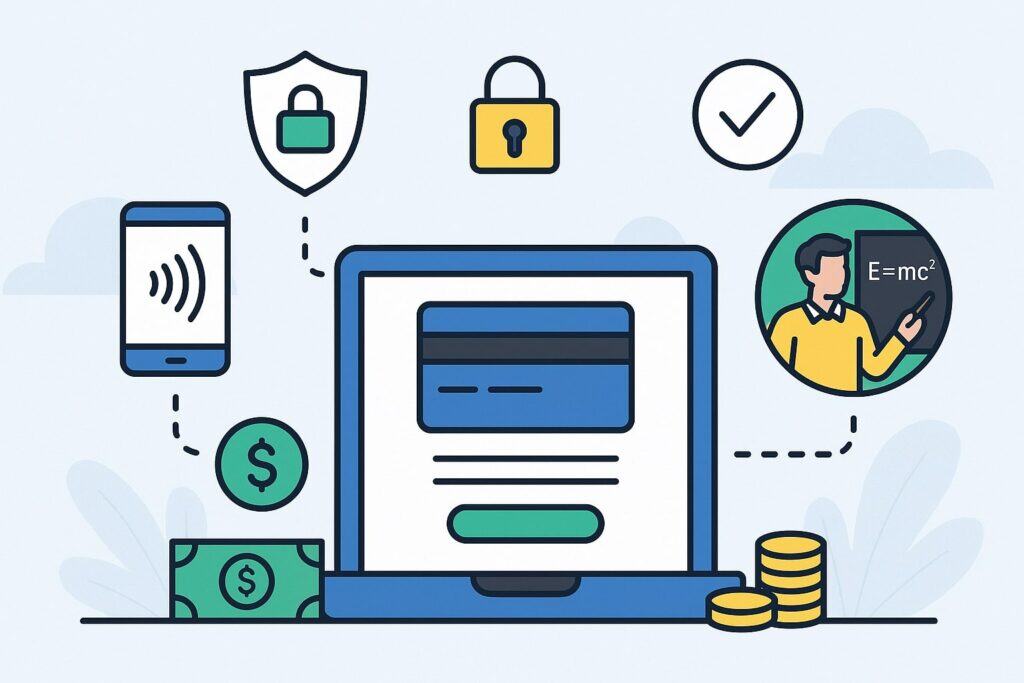
Secure online payments for tutors rely on a few basic building blocks. Understanding these will help you choose better tools and avoid risky shortcuts.
Payment Gateways, Merchant Accounts, and Platforms
At a high level, secure online payments for tutors generally pass through three layers:
- Payment gateway: A gateway is like a secure digital card terminal. It encrypts card or bank information and sends it to the relevant networks. Services like Stripe, Square, or PayPal use powerful gateways to move data safely and quickly.
- Merchant account or payment service provider: A traditional merchant account is a special kind of bank account for businesses that accept card payments. Many modern providers bundle this into an all-in-one payment service, so you don’t have to open a separate merchant account yourself. For tutors, this is usually the easiest option.
- Tutoring or business platform layer: This could be an online tutoring marketplace, a scheduling app with built-in payments, or a simple invoicing system. These platforms typically integrate with gateways and processors behind the scenes. Many now focus on education-specific workflows like lesson logs, recurring packages, and student portals.
Secure online payments for tutors are simplest when you choose a platform that already handles PCI-compliant processing and only shows you tokenized or redacted card details. You get paid without ever touching sensitive data directly.
Compliance, Privacy, and Data Protection
Two major frameworks shape secure online payments for tutors:
- PCI DSS 4.0 – Sets technical and operational rules for card data protection, stronger authentication, and more regular testing. Many new requirements are mandatory starting March 31, 2025.
- General privacy rules – Even if specific data protection laws vary by region, you should assume you must protect any personally identifiable information (PII) you collect. That includes student names, contact details, and session notes.
The best approach is to minimize the data you store. Let your payment provider handle card and bank details. Use strong passwords and multifactor authentication (MFA) on every account that touches payments. And avoid casually storing payment screenshots or full card numbers in email, chat, or cloud documents.
Comparing Payment Options for Individual Tutors
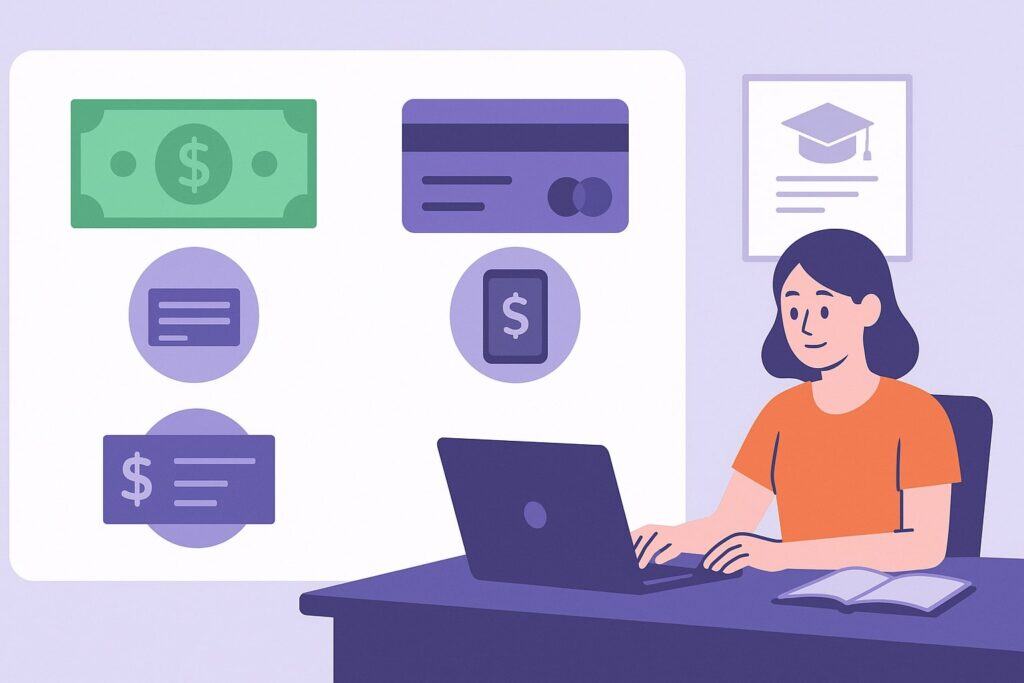
Secure online payments for tutors can be set up in several ways. The right mix depends on whether you work through a marketplace, run your own website, or tutor casually on the side.
Online Tutoring Marketplaces and All-in-One Platforms
One of the easiest ways to get secure online payments for tutors is by joining established tutoring platforms or marketplaces. Examples include well-known tutoring brands and marketplaces that handle discovery, booking, and payments together.
Pros:
- Built-in payment processing: You typically connect a bank account, and the platform handles cards and wallets through a PCI-compliant gateway.
- Fraud and dispute handling: The platform usually has policies and support teams that manage chargebacks and suspicious transactions.
- Client trust: Parents and students feel more comfortable paying via a well-known brand instead of wiring money to a stranger.
Cons:
- Higher fees: Marketplaces can charge significant commissions, sometimes 15–40% of your hourly rate.
- Limited control: You must follow platform policies about communication, refunds, and off-platform payments.
- Brand dependency: You build your reviews and reputation inside a system you don’t own.
Secure online payments for tutors on marketplaces are generally strong, but if you want more control over pricing, branding, and client communication, you may eventually want your own setup.
Invoicing and Small-Business Payment Tools
For tutors who run independently, tools like Stripe, Square, PayPal Business, or similar services can power secure online payments for tutors without a marketplace. Many scheduling apps also plug into these providers.
Key advantages:
- Professional invoices and payment links: Send invoices with “Pay Now” buttons or share one-time or recurring payment links.
- Card, wallet, and bank options: Accept debit/credit cards, digital wallets like Apple Pay, and sometimes ACH transfers.
- Subscriptions and packages: Offer monthly tutoring subscriptions or pre-paid lesson bundles with automatic billing.
When using these tools for secure online payments for tutors, make sure you:
- Use a business-oriented account, not a personal one.
- Enable MFA and alerts for logins and large transfers.
- Configure refund, cancellation, and late-payment terms in the invoice templates.
Peer-to-Peer Apps: Use with Caution
Many tutors start by using P2P apps like Venmo, Cash App, Zelle, or similar. These apps are convenient but not always ideal as a primary system for secure online payments for tutors. Consumer groups have highlighted privacy and security concerns for common P2P apps, especially around fraud and limited buyer protections.
Risks and limitations:
- Scams and social engineering: P2P apps have become hotspots for impersonation, “accidental payment,” and fake support scams.
- Weak buyer protection: Once a transfer is sent, it may be hard or impossible to reverse.
- Business-use restrictions: Some apps’ terms of service draw a line between personal and business use; you may be required to open a business account or pay additional fees for commercial transactions.
If you do use P2P apps, treat them as a backup or transitional option, not the core of your system for secure online payments for tutors. Prefer business versions where available, and clearly label your transactions as tutoring income in your records.
Step-by-Step: Setting Up Secure Online Payments for Tutors
Secure online payments for tutors don’t have to be complicated. Follow a step-by-step process and you can upgrade from “cash and hope for the best” to a professional system in a weekend.
Step 1: Choose Your Payment Model
First, decide how you want money to flow into your tutoring business:
- Marketplace-first: Ideal if you’re starting out, don’t have a website, and want built-in client leads and payment processing.
- Direct-first: Best if you already have your own students or want full control over pricing and branding.
- Hybrid: Use marketplaces for discovery but transition repeat clients to your own system (check platform rules before doing this).
Make sure whichever route you pick aligns with secure online payments for tutors: built-in fraud tools, PCI-compliant processing, and clear dispute policies.
Step 2: Open a Dedicated Business Account and Payment Profile
To support secure online payments for tutors, open a separate bank account for tutoring income. Even if you’re a sole proprietor, this helps:
- Keep personal and business finances apart.
- Make tax reporting and bookkeeping much easier.
- Reduce the chance of confusing personal transfers with business revenue.
Then create a business profile with your chosen payment processor or platform, using that account. Fill out your tutor name, logo, and contact info so invoices and payment pages look professional.
Step 3: Integrate Payments with Scheduling and Messaging
The smoothest secure online payments for tutors happen when payments, booking, and communication live together. Look for combinations like:
- Scheduling + payment links: Many calendar tools let you attach a payment link or integrate with Stripe/Square.
- Tutoring platforms with built-in scheduling: Some online tutoring systems combine virtual classroom, scheduling, and payment in one.
Consider these workflows:
- Require pre-payment at booking for one-off sessions.
- Offer recurring billing (weekly/biweekly) for regular students.
- Use payment links in invoices for monthly summary billing.
The more you automate, the fewer awkward “reminder” messages you have to send.
Step 4: Define Clear Payment, Cancellation, and Refund Policies
Secure online payments for tutors also need clear rules. Publish a simple policy document and reference it on invoices and booking pages:
- When payment is due (before the session? same day? monthly?).
- What happens if a student cancels late or doesn’t show up.
- When refunds are issued, and how partial credits or rescheduling works.
- Late fees or interest on unpaid invoices, if applicable.
This protects you during disputes and shows parents and students that you run a serious, transparent tutoring practice.
Step 5: Test, Monitor, and Adjust
Before relying fully on any system for secure online payments for tutors:
- Run small test payments from a friend or second account.
- Confirm receipts, payout times, and notifications.
- Try issuing a small refund to see how it appears to the client.
Once you’re live, monitor transactions for unusual patterns, such as large out-of-area payments from new clients, or repeated failed payments from the same card. Use your provider’s dashboards and alerts to catch problems early.
Protecting Students’ Data and Preventing Fraud
Secure online payments for tutors are only as strong as your day-to-day security habits. You don’t need to be a cybersecurity expert, but you do need to treat client data with care.
Account Security and Authentication
Start with the basics that underpin secure online payments for tutors:
- Multifactor authentication (MFA): Turn this on for your email, payment processors, tutoring platforms, and bank apps. MFA is one of the most effective defenses against account takeovers.
- Unique passwords: Use a password manager and avoid reusing passwords across different sites.
- Device hygiene: Keep your phone, tablet, and laptop updated. Install OS and browser patches, and use built-in antivirus or security tools.
You should also be extremely careful with email. Many payment scams start with phishing messages pretending to be from your provider, the tax authority, or a “support team.” Never click payment-related links in unsolicited emails; instead, log in directly via the official app or website.
Handling Payments Without Exposing Sensitive Data
For truly secure online payments for tutors, make sure you:
- Never write down or store full card numbers in notes, documents, or messaging apps.
- Avoid taking card details by phone or chat unless you’re using a secure virtual terminal from your provider.
- Use client portals or official payment pages instead of ad-hoc methods like sharing your personal bank info in chat.
PCI DSS 4.0 emphasizes strong encryption, limited access to card data, and regular testing of systems. By relying on reputable processors that are already compliant, you can piggyback on their security instead of trying to handle those responsibilities alone.
Recognizing and Avoiding Common Payment Scams
Secure online payments for tutors also depend on your ability to spot red flags. Some common patterns include:
- Overpayment and refund scams: A “client” pays more than required and asks you to refund the extra via a different method. Later the original payment is reversed, and you lose both amounts.
- Stolen card scams: A new student overpays or wants several sessions in advance, often with urgent requests. If the card is stolen, you may face chargebacks.
- Fake support or verification: Scammers pretend to be from your payment processor, requesting your login code or asking you to “verify” a test payment.
P2P platforms in particular have seen rising impersonation, accidental payment, and fake customer support scams. If anything feels rushed, overly complicated, or too good to be true, slow down. Insist on using your normal payment channels and never share one-time security codes.
Taxes, Records, and Legal Considerations
Secure online payments for tutors are closely tied to clean records and tax compliance. Digital payments leave a trail—which is good for bookkeeping but also means you need to understand how those records are reported.
1099-K and Third-Party Payment Reporting
Payment processors and marketplaces often issue Form 1099-K when your transactions meet certain thresholds. This form reports gross payment amounts processed for goods and services.
After several delays and rule changes, tax authorities are phasing in lower thresholds for 1099-K reporting over the mid-2020s, with some years treated as transition periods.
Articles and IRS FAQs highlight that third-party settlement organizations (like major payment apps and marketplaces) must report tutoring income once you cross specific transaction or dollar limits, and those thresholds are tightening over time, with some sources noting phased amounts like $5,000 and $2,500 before a future drop to $600.
Key points for tutors:
- You must report tutoring income on your tax return regardless of whether you receive a 1099-K.
- 1099-K shows gross payments; you still deduct allowable business expenses separately.
- Personal transfers from friends/family can be mistakenly reported if you mix personal and tutoring use in the same account. Keep things separate where possible.
Secure online payments for tutors should be paired with a clear bookkeeping system so that when these forms arrive, you know exactly what they represent.
Bookkeeping and Record-Keeping Best Practices
To keep secure online payments for tutors organized:
- Use a simple accounting or expense-tracking app.
- Categorize each payment as tutoring income and tag it by student or subject.
- Store receipts for expenses like software, whiteboards, learning materials, and marketing.
- Reconcile payment processor reports with your bank deposits monthly.
Well-kept records are your best defense if a tax form is wrong or a client disputes what they paid.
Contracts, Policies, and Liability
Finally, consider a basic tutoring agreement that covers:
- Payment terms and methods.
- Cancellation and refund rules.
- Expectations for online safety and video recording if lessons are recorded.
- Limitations of liability (for example, clarifying that you can’t guarantee specific test scores).
While you don’t need to become a legal expert, having written policies—and actually following them—supports the professionalism and trust behind secure online payments for tutors. If your tutoring income is significant, you may want to consult a tax professional or small-business attorney for personalized advice.
Future Trends: The Next Wave of Secure Online Payments for Tutors
Secure online payments for tutors are evolving quickly alongside broader payment technology. Planning ahead can help you adopt useful innovations without jumping onto every fad.
Real-Time Payments and Faster Payouts
Real-time payment networks and instant disbursement tools are expanding. Many processors now offer instant payout options for a small fee, and new real-time payment rails are gradually becoming standard in banking. These advances mean secure online payments for tutors may soon settle in minutes rather than days, improving cash flow for independent educators.
Over the next few years, expect:
- More tutoring platforms to offer same-day payouts to tutors for completed sessions.
- Payment providers to roll out instant transfer to debit cards or banks, powered by newer payment networks.
- Better real-time fraud monitoring as transactions become faster.
Faster money movement increases the importance of strong authentication and fraud controls, since there’s less time to catch mistakes or fraud before funds move.
Digital Wallets, Embedded Payments, and EdTech Integrations
Digital wallets and embedded payment experiences are becoming normal parts of secure online payments for tutors. Payment app reviews for 2025 highlight wallet-style apps that let people manage multiple cards, banks, and currencies from one interface.
For tutors, this means:
- Students may pay directly from their preferred wallets (Apple Pay, Google Pay, etc.).
- Online classroom tools and learning management systems are likely to integrate payments, so students can book, join, and pay for sessions without leaving the app.
- Subscription and membership models (for ongoing access to a tutor or learning community) will become easier to set up and manage.
To stay competitive, tutors should choose systems that support wallet payments and can plug into or grow with the broader edtech ecosystem.
AI-Driven Fraud Detection and Smarter Security
AI tools are increasingly used by payment providers to analyze patterns and spot suspicious activity in real time. This will shape secure online payments for tutors in several ways:
- Dynamic fraud checks: Transactions from unusual locations, devices, or IP addresses may be flagged automatically.
- Risk-based authentication: Low-risk transactions might be frictionless, while risky ones trigger extra verification.
- Smarter dispute handling: AI-assisted tools can help payment providers quickly categorize and respond to chargebacks.
On the flip side, scammers also use AI to generate more convincing phishing emails and fake profiles. That means tutors must stay alert and keep brushing up on security basics even as their providers’ tools get smarter.
Best Practices Checklist for Secure Online Payments for Tutors
To bring everything together, here’s a practical checklist you can use to upgrade and maintain secure online payments for tutors:
- Separate business and personal:
- Dedicated bank account and payment profiles for tutoring.
- Clear labeling of tutoring transactions in your records.
- Dedicated bank account and payment profiles for tutoring.
- Choose reputable, PCI-compliant providers:
- Use established processors or tutoring platforms that follow PCI DSS 4.0 standards.
- Avoid handling raw card data yourself.
- Use established processors or tutoring platforms that follow PCI DSS 4.0 standards.
- Use strong security on all accounts:
- Enable MFA everywhere (email, bank, payment apps, platforms).
- Use a password manager and unique passwords.
- Keep devices updated and secured.
- Enable MFA everywhere (email, bank, payment apps, platforms).
- Standardize your payment workflow:
- Decide when clients pay (before, after, or monthly).
- Use invoices and payment links instead of ad-hoc transfers.
- Integrate payments with scheduling and communication tools.
- Decide when clients pay (before, after, or monthly).
- Clarify your policies:
- Publish payment, cancellation, and refund rules.
- Share them with clients at onboarding and on invoices.
- Publish payment, cancellation, and refund rules.
- Stay alert to scams and fraud:
- Be skeptical of overpayments, urgent requests, and unusual refund methods.
- Never share one-time login codes or passwords.
- Use official apps and websites to manage your accounts.
- Be skeptical of overpayments, urgent requests, and unusual refund methods.
- Keep clean records and watch tax rules:
- Track income and expenses regularly.
- Understand how 1099-K and other forms might apply to you as thresholds change.
- Track income and expenses regularly.
By revisiting this checklist a few times a year, you can keep secure online payments for tutors aligned with evolving technology and regulations.
FAQs
Q1. What’s the safest way to accept payments as a tutor?
Answer: The safest way to accept payments as a tutor is to use a reputable payment processor or tutoring platform that handles PCI-compliant card processing for you. Secure online payments for tutors are strongest when you never see or store full card numbers yourself. Instead, you use:
- Professional invoices with “Pay Now” buttons.
- Payment links from Stripe, Square, PayPal Business, or similar.
- Marketplace or tutoring platforms that integrate payments, calendars, and messaging.
These services encrypt card data, apply fraud checks, and comply with PCI DSS 4.0 requirements. You strengthen this by enabling MFA, using unique passwords, and not mixing personal and tutoring funds.
P2P apps can be convenient, but for truly secure online payments for tutors, they’re better as a backup or temporary solution. Business-focused tools offer clearer records, better dispute handling, and more professional client experiences.
Q2. Should I use Venmo, Cash App, or Zelle for tutoring payments?
Answer: You can use these apps, but they shouldn’t be your primary system for secure online payments for tutors. P2P apps were designed mainly for personal transfers, like splitting dinner bills, and they come with limitations:
- Higher fraud risk and fewer protections compared to some card-based payment methods.
- Terms of service restrictions on commercial use, which may require a business account or different fee structure.
- Record-keeping confusion when personal and tutoring transactions mix in the same app.
If you do use them, keep things as safe as possible:
- Have a clearly labeled profile for tutoring.
- Avoid overpayments, refunds to different accounts, or complex transfer chains.
- Move funds regularly into your dedicated bank account.
For long-term secure online payments for tutors, migrate repeat students to more professional invoicing or platform-based methods.
Q3. How do I protect my students’ data when taking payments online?
Answer: Protecting student data is central to secure online payments for tutors. Follow these principles:
- Minimize what you collect: Only gather information that’s necessary for billing and communication.
- Outsource card handling: Use processors that tokenize card details and never send full card numbers via chat or email.
- Secure your devices and accounts: Enable MFA, keep software up to date, and lock screens when you’re away.
- Limit access: Don’t share your login with assistants or co-tutors—if needed, use team features in your platforms.
You should also avoid storing screenshots of payment pages that show sensitive data and regularly review your privacy settings in tutoring and payment apps. When secure online payments for tutors rely on professional tools and good digital hygiene, you significantly reduce the risk of exposing students’ personal information.
Q4. How do online payments affect my taxes as a tutor?
Answer: Every dollar you earn from tutoring—cash, card, or app payments—is taxable income. Payment processors and marketplaces may send you Form 1099-K if your transactions cross certain thresholds, and those thresholds are expected to tighten through the mid-2020s as updated reporting rules roll out.
For secure online payments for tutors, this means:
- Keep detailed records of all tutoring income and expenses.
- Understand that 1099-K shows gross payment volume, not profit.
- Don’t rely solely on whether you receive a form; you’re required to report income regardless.
Because the specifics can change and thresholds are in flux, it’s wise to consult a tax professional if your tutoring income is significant. They can help you interpret 1099-K forms and structure your tutoring activity in a tax-efficient way.
Q5. How can I make it easy for clients to pay without sacrificing security?
Answer: Secure online payments for tutors should feel simple, not stressful, for clients. To keep things both safe and convenient:
- Offer multiple familiar methods (card, wallet, and possibly ACH) through a single trusted provider.
- Integrate payment with your booking system so clients can schedule and pay in one flow.
- Automate recurring billing for regular students so they don’t have to remember individual payments.
- Provide clear invoices and receipts with your tutoring brand, contact details, and policies.
Clear instructions and reliable links reduce friction and mistakes. That’s the heart of secure online payments for tutors: a process that feels straightforward for clients while quietly leveraging strong security in the background.
Conclusion
Secure online payments for tutors are now a core part of running a modern tutoring practice. They touch everything: client trust, professional branding, fraud prevention, tax compliance, and your own peace of mind.
By choosing reputable processors or platforms, separating personal and tutoring finances, enforcing strong security practices, and keeping up with evolving standards like PCI DSS 4.0 and shifting 1099-K thresholds, you build a solid foundation.
Looking ahead, real-time payments, digital wallets, embedded edtech payments, and AI-driven fraud tools will continue to reshape how secure online payments for tutors work. Tutors who embrace these changes thoughtfully—without cutting corners on security—will be best positioned to grow stable, scalable tutoring businesses.
If you treat your payment setup with the same care you give your lesson plans, secure online payments for tutors can become a quiet advantage: clients feel safe, you get paid reliably, and your tutoring work runs smoothly in the background.