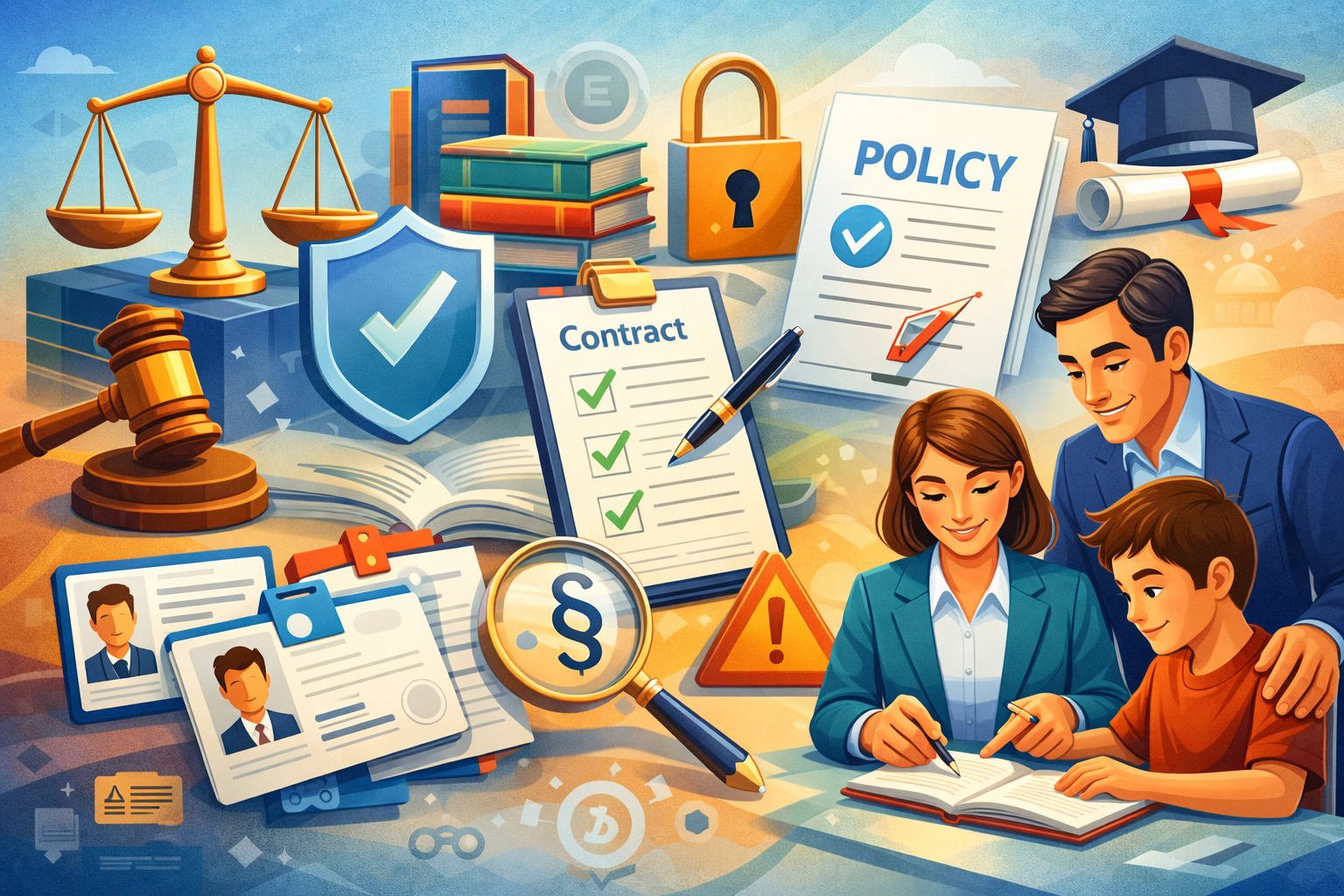
Running a tutoring center is equal parts education, customer service, and regulated business. The most sustainable tutoring center compliance approach is to treat compliance as an operating system: policies, contracts, staff training, recordkeeping, and software controls that stay consistent even as you grow.
That matters because tutoring center compliance touches multiple legal areas at once—privacy, consumer protection, labor rules, accessibility, taxes, and local licensing.
This guide focuses on practical tutoring center compliance for tutoring centers that serve families, K–12 students, college students, and adult learners. It’s written for owners, directors, and operations managers who need a clear plan that protects the business, the staff, and student information.
Licensing, Location Rules, and Business Structure for Tutoring Center Compliance
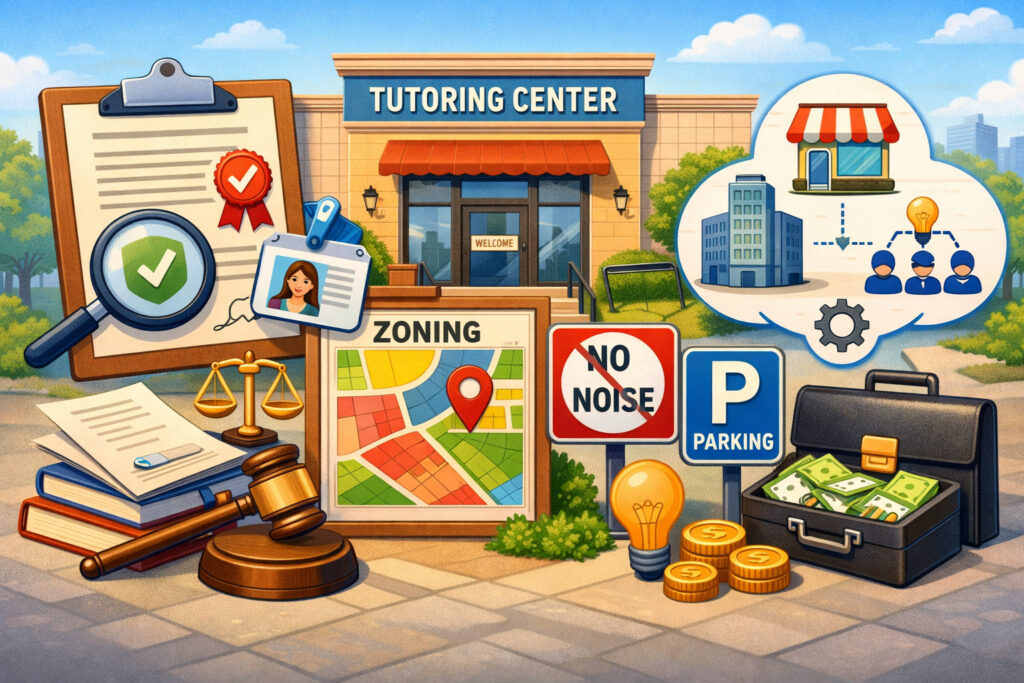
Tutoring center compliance starts before you enroll your first student. Your legal setup—entity type, registrations, tax accounts, permits, and local approvals—sets the foundation for everything else.
In many cities and counties, a tutoring center is treated like a “business services” or “educational services” operation, which can trigger zoning, occupancy, parking, signage, and fire-safety requirements.
If you lease space in a retail plaza, confirm your use is permitted under the property’s zoning classification and the landlord’s permitted-use clause.
A tutoring center compliance checklist for this stage should include: (1) entity formation and governance documents, (2) tax registration, (3) local business licensing, and (4) facility safety readiness. Your insurance broker and attorney should align your policies with your actual services.
For example, if you provide transportation, in-home tutoring, or online sessions, those activities may require different coverage or operational controls than a single-site classroom model.
From a risk standpoint, the biggest early failure is “operating ahead of approvals.” If an inspection or zoning complaint happens after you’ve already enrolled students, you can face forced closure and refunds.
That’s not just costly—it’s a reputation hit. Build a tutoring center compliance file containing your lease, permits, insurance declarations, inspection records, and emergency procedures so you can respond quickly if a regulator, insurer, or landlord asks.
Finally, put governance into writing even if you’re small. Define who can sign contracts, approve refunds, access student records, and administer tutoring software. Clear internal controls are a tutoring center compliance advantage because they reduce errors, limit data exposure, and help you scale without chaos.
Student Privacy, Data Security, and Recordkeeping for Tutoring Center Compliance

Student information is the heart of your operation—and the biggest compliance risk. Tutoring center compliance here is about collecting only what you need, storing it securely, limiting who can access it, and communicating transparently with parents and students.
The first step is data mapping: list what you collect (names, contact details, grade level, assessment data, learning notes, payment data), where it lives (tutoring software, email, spreadsheets, paper files), and who touches it (front desk, tutors, managers, contractors).
Two privacy frameworks often affect tutoring center compliance, depending on how you work with schools and the ages you serve:
- Education record privacy: When you provide services as a vendor to a school or district—or you handle student education records on their behalf—expect contract obligations aligned with education record privacy rules.
The Department of Education has specific guidance for third-party service providers handling student information for schools, emphasizing limits on redisclosure and use of data. - Children’s online privacy: If your website, app, or tutoring software collects personal information online from children under 13—or you have actual knowledge you’re doing so—tutoring center compliance should address verifiable parental consent, notices, and limits on collection and sharing.
COPPA’s requirements and definitions are spelled out by the FTC and in the federal regulation text.
Even when federal rules don’t apply directly to every tutoring center, state privacy laws can. Many states now grant consumer rights (access, deletion, correction, opt-out) and impose duties like data minimization and vendor contract controls.
Texas, for example, has a comprehensive privacy law effective July 1, 2024, with consumer rights and business duties that can affect tutoring center compliance if you meet scope criteria.
A strong tutoring center compliance posture also treats cybersecurity as mandatory operations—not a tech add-on. Use role-based access, MFA, encrypted storage, secure backups, and documented offboarding when staff leave. If you process payments, avoid storing full card data; let your payments provider handle sensitive payment details.
Build recordkeeping rules, too: how long you keep assessments, session notes, chat logs, recordings, and incident reports. Clear retention limits reduce legal exposure and breach impact. Put it all into a simple “Student Information Handling Policy,” train staff, and audit quarterly.
Contracts, Policies, and Consumer Protection for Tutoring Center Compliance
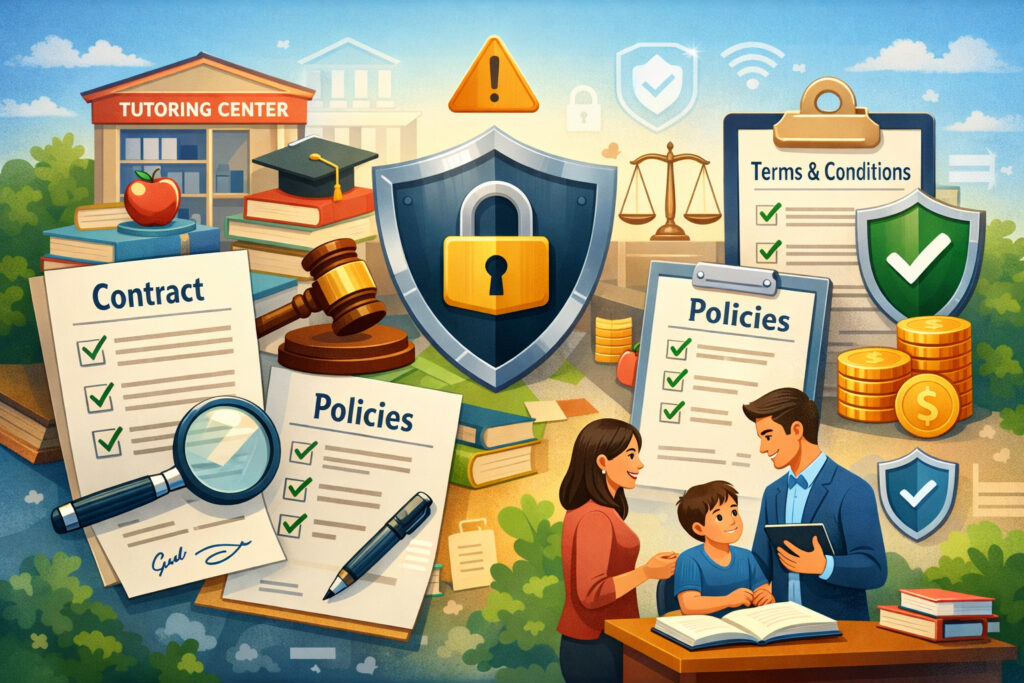
Most tutoring center compliance disputes don’t start with a regulator—they start with an unhappy parent and a refund demand. Your contracts and policies are your first line of defense, and they must match how you actually sell and deliver services.
Use plain language, short sections, and consistent terms across your website, enrollment forms, invoices, and tutoring software.
A tutoring center compliance-ready enrollment agreement should address:
- Scope of service: subjects, session length, modality (in-center/online/in-home), tutor substitution rules, and how progress is measured
- Scheduling and attendance: cancellation windows, no-show fees (if any), rescheduling limits, holiday closures
- Pricing and billing: package terms, auto-renew rules, late fees, chargeback cooperation, and receipt delivery
- Refund policy: when refunds are allowed, prorating method, and how disputes are handled
- Disclosures: tutoring is educational support, not guaranteed outcomes; test prep disclaimers; limitations of advice
- Data and communications: consent for texting/emailing, use of tutoring software portals, optional recording permissions
- Safety and conduct: behavior expectations, harassment policy, and incident escalation
Consumer protection risk rises when marketing claims feel like guarantees. “Guaranteed grade increase” or “guaranteed score improvement” language can backfire. Tutoring center compliance marketing should focus on outcomes you can support: structured plans, qualified staff, measurable milestones, and transparent reporting.
If you use subscriptions, make auto-renew terms obvious and easy to cancel. Keep records of the disclosures shown at checkout. Many disputes turn on what was displayed and accepted.
Finally, align your vendor contracts with your tutoring center compliance needs. If you use tutoring software, insist on: confidentiality obligations, security controls, breach notification timelines, data ownership terms, and deletion/export options.
If you contract independent tutors, ensure the contract addresses confidentiality, appropriate communications with minors, and acceptable use of student data.
Workforce, Background Checks, and Minor Safety for Tutoring Center Compliance
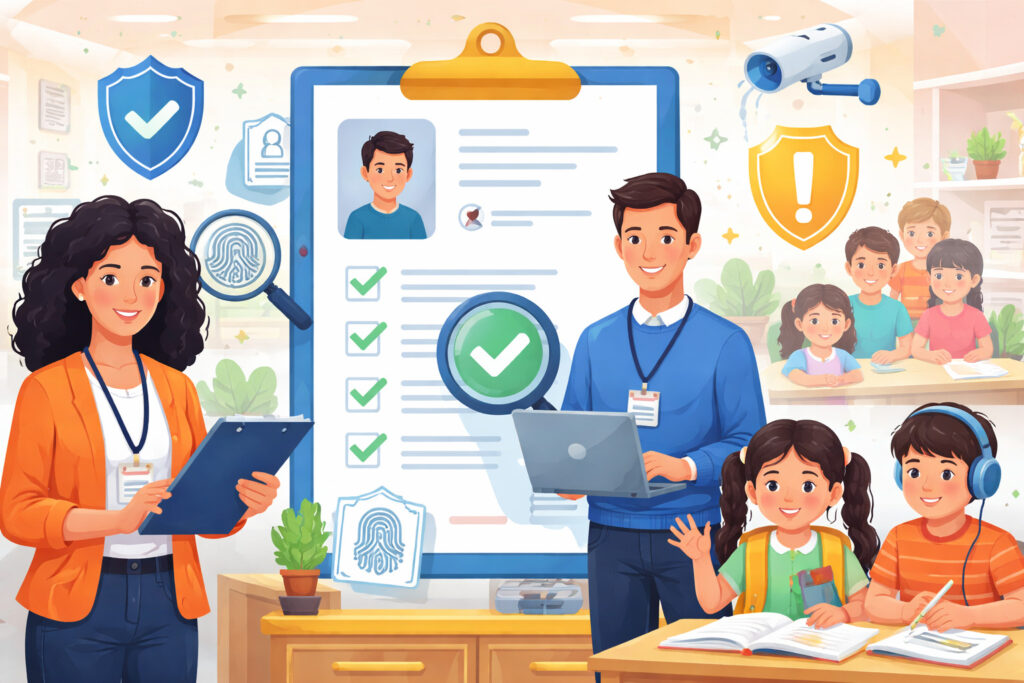
Tutoring center compliance is also people compliance. Your center’s legal risk increases when you hire fast, onboard loosely, or treat tutors inconsistently. Start by classifying workers correctly.
Misclassification problems—treating employees as contractors—can create wage/hour, tax, and benefits exposure. Build a consistent model: either a true contractor program with appropriate independence, or an employee program with scheduling controls and supervision.
Background checks and reference checks are a safety expectation for tutoring center compliance, especially when staff interact with minors. Create a written “Minor Safety Standard” that covers:
- staff screening and re-screening cadence
- two-adult or visibility rules (open-door, glass panels, cameras in common areas where lawful)
- communications boundaries (approved channels only, no private social media messaging)
- in-home tutoring rules (if offered)
- reporting procedure for suspected abuse or safety concerns
- incident documentation and escalation
If you record sessions, tutoring center compliance requires extra care: disclose recording, obtain consent, store securely, and set retention limits. Use the least intrusive approach that still supports quality control.
Train supervisors on harassment prevention, disability accommodation basics, and appropriate discipline. A consistent HR process is tutoring center compliance protection because it reduces claims of unfair treatment.
Also address intellectual property and materials. Many tutors bring worksheets, third-party test prep content, or online resources. Your policies should clarify acceptable use and prevent copyright violations. Use licensed materials or original content whenever possible.
Financial Compliance, Data Safeguards, and Future Trends in Tutoring Center Compliance
Tutoring center compliance increasingly overlaps with “information security compliance,” especially if you offer payment plans, store financial information, or extend credit-like arrangements.
Depending on your business model, you may be considered a “financial institution” under federal rules for safeguarding customer information, which requires a written information security program with administrative, technical, and physical safeguards. The FTC provides business guidance on the Safeguards Rule, and the rule text details the purpose and scope.
Even if you’re not directly covered, adopting similar controls is a smart tutoring center compliance move because it reduces breach risk and improves trust. Implement vendor due diligence, written risk assessments, access controls, encryption, and incident response planning.
Also plan for a patchwork future. State privacy laws are expanding, and children’s privacy enforcement remains active. The FTC continues COPPA oversight, and there have been recent public enforcement actions and settlements in the broader children’s privacy space—signaling that tutoring center compliance for child-focused services will stay under scrutiny.
Future prediction: expect three trends to shape tutoring center compliance over the next 2–5 years:
- stricter children’s privacy expectations and more explicit consent requirements for behavioral advertising and analytics, especially for minors;
- more contractual compliance demands from school partners and enterprise clients (security questionnaires, SOC reports, breach clauses);
- increased reliance on AI tutoring tools—driving new policy needs around transparency, bias, and explainability in learning recommendations.
Prepare by building a lightweight compliance program now: policies, training, audits, and documented controls. Tutoring center compliance done early is cheaper than repairing reputational damage later.
FAQs
Q.1: What are the biggest tutoring center compliance risks?
Answer: The most common tutoring center compliance risks are unclear refund terms, weak privacy/security controls, poor staff classification, inconsistent child-safety practices, and marketing claims that look like guarantees. Fixing those five areas prevents most disputes.
Q.2: Do tutoring centers need parental consent to collect student data?
Answer: Often yes—especially if collecting data online from children under 13 or if your services are directed at children and you collect personal information online. COPPA sets specific requirements around notice and verifiable parental consent in those situations.
Q.3: How should a tutoring center handle student records from a school partner?
Answer: Treat the data as restricted: use it only to provide the contracted service, limit redisclosure, and follow contract terms aligned with education record privacy guidance for vendors.
Q.4: Are state privacy laws relevant to tutoring center compliance?
Answer: Yes. If you meet a law’s scope thresholds, you may need processes for consumer rights requests and stronger vendor contract controls. Texas’ law, effective July 1, 2024, is one example.
Conclusion
Tutoring center compliance is not a one-time project—it’s a repeatable routine. Start with licensing and operating permissions, then lock in privacy and security controls around student information.
Use clear enrollment agreements and marketing disclosures to reduce disputes. Build child-safety standards and consistent HR practices to protect students and staff. Finally, adopt strong data safeguards and vendor management so your tutoring center compliance program keeps up with modern expectations.
If you want to grow confidently, document your policies, train your team, and run simple quarterly audits. That combination—clarity, consistency, and proof—is what makes tutoring center compliance real.